
Is it you, or is it the balls?
Could be either, honestly. A few things can make a good night feel flat, and only one of them is the balls.
Cold weather's a big one. Cold air inside a ball means less pressure, and cold rubber is stiffer. So everything bounces lower. That's why winter nights outdoors feel like you're playing in mud.
New gear takes a few sessions to settle in, whether it's a racket, a grip or shoes. Every club's court plays a bit differently too. And then there's you. Long day, short sleep, skipped the warm-up. We've all blamed the racket for that one.
If it's none of those, have a look at the balls.
Why do balls go flat?
A padel ball's a rubber shell with air in it, pumped up a bit higher than the air outside. In the can, the pressure's the same inside and out, so nothing moves. Crack the can and that changes. The air starts slowly working its way out through the rubber.
Nobody's properly tested how fast, and the numbers you'll find online are all over the place. Most reckon the air leaks quickest in the first few days, then slows down. Playing speeds it up. So does leaving the balls in a cold car.
The sneaky part is that it's slow. The balls are only a tiny bit flatter each game, so you don't notice until you open a new can and go, oh.
So how do you tell if they're flat?
Grab one of yours and one from a new can and drop them together from head height onto concrete. If yours lands noticeably lower, there's your answer.
If you want to be official about it, the International Padel Federation says a proper match ball dropped from 2.54 metres should bounce back up to between 1.35 and 1.45 metres. Good luck finding the ladder.
Or just squeeze them. A new ball pushes back. A tired one gives up pretty easily.
What can you do about it?
The easy fix is a new can, which is also a pretty good excuse. Keep the old ones for warming up and drills. They're fine for that. And in winter, keep your balls inside rather than in the car boot overnight.
Or keep them at pressure between games, so a can lasts longer. That's literally what our tubes are for. We're a bit biased.
If you're keen, we do two kinds. The Twisty is a simple one you twist shut that holds a can at 11 psi between games, and the automatic does the pumping for you.
One thing no tube can fix is bald felt. Once the fuzz is gone and the ball's gone shiny, it's done, whatever's inside it.
Stuff people ask
- How long do padel balls last once the can's open?
- Depends on the ball, the weather and how hard you whack it. Most people notice after a couple of weeks.
- Why does padel feel slower in winter?
- Cold balls have less pressure in them and the rubber stiffens up, so they don't bounce as high.
- Do pressureless padel balls go flat?
- Not in the same way. There's no extra air in them to lose. They just wear out as the felt and rubber break down.
Keep yours bouncy
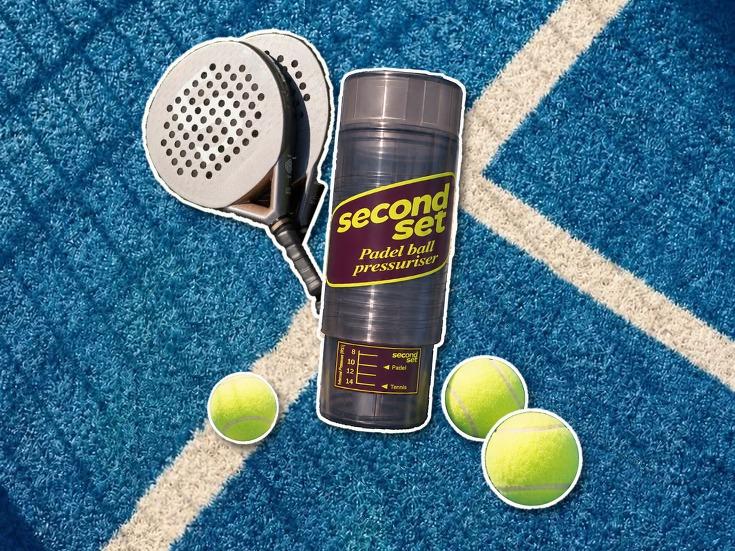
Padel ball pressuriser
Keeps opened balls bouncy. All it takes is a twist.
$49 · Plus $10 shipping, or the Twin Twisty for $85 with free shipping
Preorder now · Landing late November
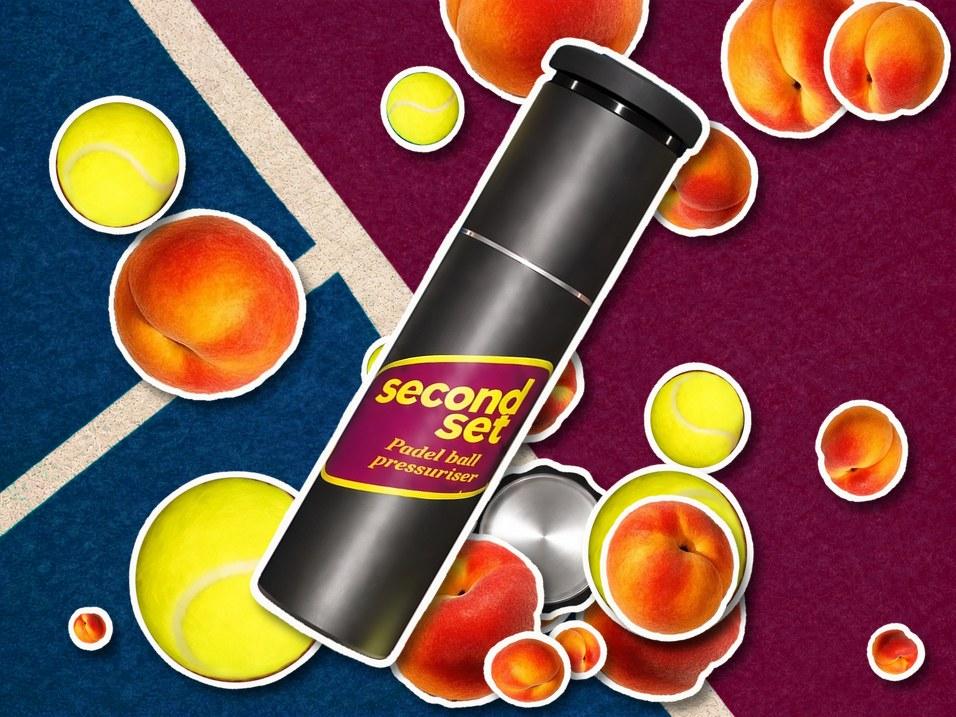
Automatic padel ball pressuriser
Keeps balls bouncy, and brings flat‑ish ones back.
$189 · Free shipping
Preorder now · First batch of 20 lands in December
Other guides
Where this comes from
- International Padel Federation, ball regulations. The rebound rule.
- Allen and Allen, Modeling the bounce of a gas-filled ball (2022). Cold and bounce, tested with a tennis ball.
- UK National Physical Laboratory, temperature and bounce report. Cold and bounce.
- How fast pressure drops. No independent study found. Sellers' figures range from about 10% to 25% in the first two days, so we haven't quoted a number.